
Anti Ligature Awareness Training: Keeping Vulnerable People Safe
Anti ligature training is essential for anyone working in healthcare, social care, mental health, or education environments where vulnerable people may be at risk of self-harm. According to recent research in UK mental health inpatient settings, around 80% of deaths by suicide in these settings involve the use of a ligature such as bedding, clothing, or other items that could be attached to an anchor point. This stark reality highlights the need for effective training that helps staff identify risks, understand behaviours, and take action that protects lives.
Momentum People provides an expert‑led anti ligature training course designed to build confidence, competence, and compliance for professionals across the UK.
What Is Anti Ligature Awareness?
Anti ligature awareness is about understanding the risks associated with ligature points – places where someone could attach a cord, belt, or other item to self-harm. These risks are particularly relevant in:
-
Mental health facilities
-
Hospitals and care units
-
Supported living accommodations
-
Educational environments for vulnerable students
An effective anti ligature training course helps staff recognise hazards, assess environments, and implement strategies to reduce risk.
Why Anti Ligature Training Matters
The consequences of failing to identify and mitigate ligature risks can be severe. Staff without training may struggle to prevent incidents, putting vulnerable people in danger and exposing organisations to regulatory, legal, and reputational risks.
Key benefits of anti ligature training include:
-
Protecting vulnerable individuals
-
Increasing staff confidence in recognising hazards
-
Understanding legal and regulatory responsibilities
-
Improving safety policies and procedures
-
Supporting a culture of vigilance and care
Core Elements of an Anti Ligature Training Course
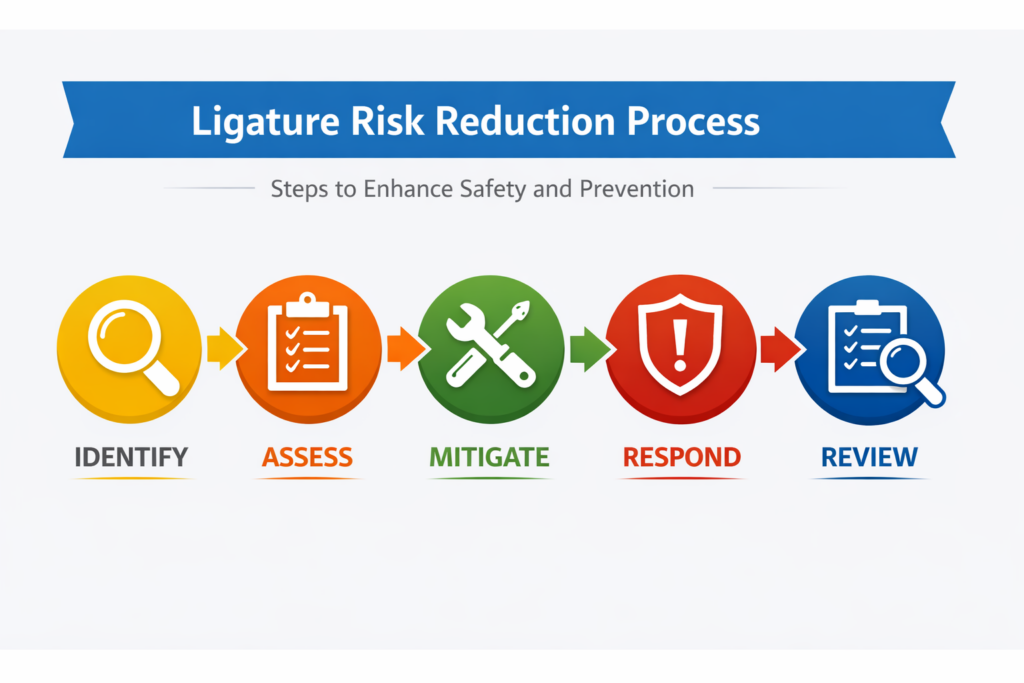
A high-quality anti ligature training course typically covers:
-
Understanding ligature points: Identifying potential hazards in different environments
-
Risk assessment: Evaluating environments and prioritising action
-
Preventative measures: Modifying or monitoring high-risk areas
-
Incident response: Safe and effective steps if a ligature event occurs
-
Policy and compliance: Legal frameworks, reporting procedures, and organisational responsibilities
Key Components of Anti Ligature Training
| Training Module | Learning Outcome | Practical Application |
|---|---|---|
| Identifying ligature points | Staff can spot hazards in their environment | Walkthroughs, environmental checks |
| Risk assessment | Prioritising high-risk areas | Scoring risks and creating mitigation plans |
| Preventative measures | Reduce opportunities for self-harm | Install anti ligature fittings, remove hazards |
| Incident response | Staff respond quickly and safely | Emergency procedures, safe patient handling |
| Policy and compliance | Understand responsibilities | Documenting, reporting, and auditing |
Who Should Take Anti Ligature Training?
Anti ligature awareness training is suitable for all staff working in settings where vulnerable individuals may be at risk, including:
-
Nurses, carers, and healthcare assistants
-
Support workers in social care settings
-
Teachers and educational support staff
-
Facilities and estates managers responsible for safety
-
Senior managers responsible for safeguarding policies
How Momentum People Delivers Anti Ligature Training
Momentum People’s anti ligature training course is designed for real-world application. Key features include:
-
Expert trainers: Delivered by experienced healthcare and social care professionals
-
Interactive learning: Case studies, role play, and practical examples
-
Flexible formats: In-person sessions, virtual learning, and blended courses
-
CPD accredited: Supports professional development and regulatory compliance
Tips for Implementing Anti Ligature Awareness in Your Organisation
-
Conduct regular environmental audits to identify ligature points
-
Ensure all staff complete anti ligature training and refresh regularly
-
Maintain clear incident reporting and escalation procedures
-
Collaborate across teams to share awareness and best practice
-
Use signage and reminders to reinforce vigilance in high-risk areas
Why Anti Ligature Training Is Essential
Investing in anti ligature training is not just a legal or compliance requirement, it is a moral responsibility to protect vulnerable people. Momentum People’s anti ligature training course empowers staff to act with confidence, maintain safe environments, and support the wellbeing of those in their care.
Take the next step: Book your anti ligature training course with Momentum People today and ensure your team has the knowledge and skills to prevent incidents and safeguard lives.
Explore our other courses, we offer both open courses and full organisation courses.